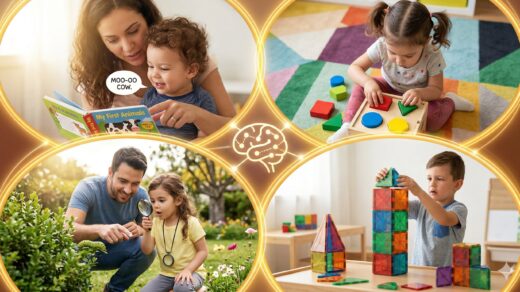
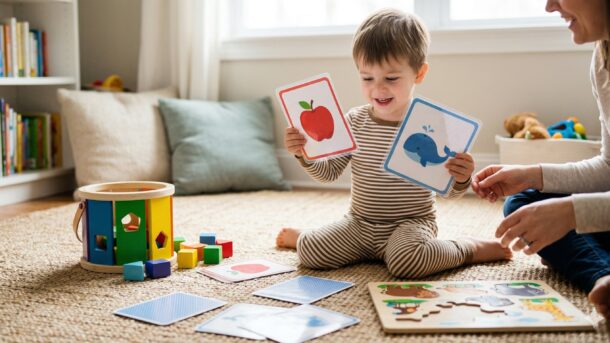
Young children learn best when they are actively involved.
They learn by noticing, matching, repeating, remembering, experimenting, and trying again. That is why games can be so powerful in the early years. A good game does more than just keep a child busy; it gives them a reason to focus, think, respond, and stay engaged long enough with an activity to learn from it.
When people look for games for cognitive development in early childhood, they are usually looking for playful ways to support skills like memory, attention, sequencing, problem-solving, and early reasoning. The best games do not feel heavy or academic. They feel clear, manageable, and enjoyable.
Why Cognitive Development Matters in Early Childhood:
Cognitive development affects how children think, remember, solve problems, understand routines, and make sense of what is happening around them. These are the skills behind everyday learning.
A child uses cognitive skills when they:
- remember where something belongs
- notice what has changed
- match two objects
- follow a short instruction
- complete a puzzle
- predict what comes next
- solve small problems during play
In early childhood, these abilities are still developing quickly. That is why small, repeated opportunities to practice them can make such a difference.
What Are Games for Cognitive Development?
Games for cognitive development are simply activities that help children use and strengthen early thinking skills through play.
They may support:
- memory
- attention
- focus
- pattern recognition
- sequencing
- problem-solving
- decision-making
- visual processing
Some games are very simple, like matching pairs or sorting by color. Others involve movement, turn-taking, or figuring out what to do next. The format matters less than the thinking it encourages.
What Good Cognitive Games Look Like in Early Childhood:
The most effective games in the early years usually have a few things in common.
- They Are Easy to Understand:
Young children engage better when the rules are simple, and the goal is clear. If a game feels confusing from the start, it becomes harder for the child to stay interested.
- They Use Repetition Well:
Children build cognitive skills through repeated practice. A game that allows them to try again without pressure is often more useful than one that changes too quickly.
- They Match the Child’s Stage:
A game should feel possible, not overwhelming. If it is too easy, the child loses interest. If it is too difficult, they may shut down.
- They Make Thinking Active:
Good games invite children to notice, remember, compare, match, choose, or solve. They turn thinking into something the child is actually doing.
Types of Games That Support Cognitive Development in Early Childhood:
- Matching Games:
Matching games help children compare, remember, and recognize patterns. These can include picture matching, memory card games, or pairing objects.
- Sorting Games:
Sorting by color, shape, size, or category helps children notice similarities and differences. It also supports classification and early reasoning.
- Sequencing Games:
Games that ask children to remember what comes first, next, or last help build their sense of order and memory. This can happen through picture sequences, routines, or simple storytelling games.
- Puzzle Games:
Puzzles encourage children to think about space, shape, fit, and problem-solving. They also support persistence and attention.
- Cause-and-Effect Games:
Activities where children press, build, or try something to see what happens help them understand that actions lead to results, an essential early concept.
- Turn-Taking Games:
Simple turn-taking games help children slow down, wait, watch, and respond. That builds attention and self-control alongside cognitive growth.
- Movement-Based Thinking Games:
Some children stay more engaged when learning includes movement. Games that combine action with focus, memory, and decision-making can be especially helpful for them.
Examples of Cognitive Games at Different Early Childhood Stages:
For Younger Children:
At the earlier stages, games might include:
- shape sorters
- simple matching toys
- stacking activities
- basic cause-and-effect toys
- object-hiding and finding games
These help build attention, recognition, and early problem-solving.
For Preschoolers:
As children grow, games can become slightly more structured:
- memory matching cards
- simple puzzles
- pattern games
- sorting and grouping activities
- story-based prediction games
- sequencing games
At this stage, children are often ready for more intentional thinking, but they still learn best through play.
How Games Support Real Cognitive Growth:
Games are effective because they create a reason to repeat a skill.
A child may not want to “practice memory,” but they may happily play a matching game several times. They may not want to “work on sequencing,” but they may enjoy a game that puts steps in order. That is what makes play powerful in early childhood. It lowers resistance and increases repetition.
Games also provide immediate feedback. Children can quickly see when something works, fits, or matches, and when it doesn’t. This helps them learn naturally, without constant correction.
What to Look for When Choosing Cognitive Games:
If you are choosing games for cognitive development in early childhood, ask:
- Is the game simple enough for the child to understand?
- Does it focus on one or two clear skills?
- Can the child repeat it without frustration?
- Does it feel engaging rather than overstimulating?
- Is it something the child can succeed in with support?
The best games are often the ones children want to come back to. That is what creates real practice.
Games at Home, in Classrooms, and in Therapy:
Cognitive games can be useful in different settings.
At home, they support everyday learning in a relaxed, low-pressure way.
In classrooms, they can help children practice attention, memory, and problem-solving alongside routine learning.
In therapy settings, they make structured skill-building feel approachable and more engaging.
The setting changes, but the goal stays the same: giving children repeated opportunities to think, respond, and build confidence.
When Children Need More Support:
Some children need more repetition, more visual support, or more active engagement to build cognitive skills, especially those who struggle with focus, memory, processing, or staying with a task.
For those children, game-based learning can be especially helpful because it gives structure without making the experience feel heavy. Interactive activities can make it easier to return to the same skill again and again in a way that still feels rewarding.
For children who benefit from structured interactive play, brain games to help with memory can support attention, recall, and early problem-solving in a more engaging format.
How WonderTree Fits:
WonderTree works best when it supports the kind of thinking children already need to practice. The aim is not to replace books, routines, conversations, or hands-on play. It doesn’t replace books, routines, conversations, or hands-on play; it adds to them.
The goal is to give children another way to build memory, attention, sequencing, and problem-solving through active participation. This can be especially helpful for children who benefit from learning that feels more visual, repeatable, and easier to stay engaged with.
In that sense, games likeWonderGames fit naturally into a child’s day, offering simple, interactive ways to practice these skills through play, without making learning feel like a task.